
AI lets you publish faster, but Google still rewards helpful, people-first pages. If you align AI content with E-E-A-T – experience, expertise, authoritativeness and trustworthiness – you can scale without sacrificing credibility or rankings, especially with an AI content creation workflow. This guide covers AI content and E-E-A-T, also searched as ai content and eeat and ai content and e-e-a-t.
What E-E-A-T means for AI content today
E-E-A-T is not a checklist or a single ranking factor. It is a quality framework Google uses to evaluate whether your page is trustworthy and genuinely useful. AI does not change that standard. It raises the bar for transparency, originality and evidence.
- Experience: Show first-hand use, testing or real-world involvement. Screenshots, photos, data and anecdotes beat generic summaries.
- Expertise: Demonstrate subject knowledge. Qualifications help, but so do clear explanations, correct terminology and depth where it matters.
- Authoritativeness: Earn recognition from reputable sources. Citations, mentions, high-quality backlinks and consistent entity information strengthen authority.
- Trust: The outcome of the above. Accurate, sourced, up-to-date and safe content, paired with a credible site and clear ownership, builds trust.
Google’s stance is technology-neutral: high-quality content can be created with or without AI. What matters is that you serve users first and avoid scaled, unoriginal pages that exist only to manipulate rankings.
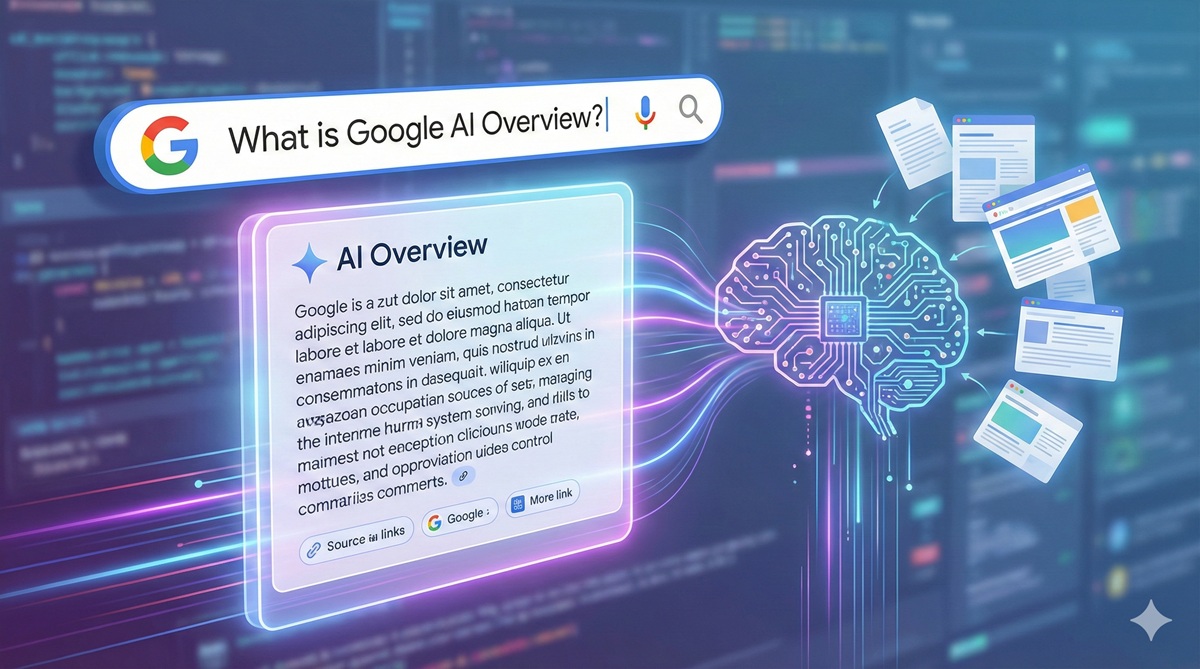
If AI Overviews are a key surface for your audience, learn how to optimize for Google AI Overviews.
When automation helps vs. hurts SEO
Automation is useful when it improves relevance, freshness or accessibility, and risky when it floods the web with thin, unreviewed text. Google’s spam policies apply regardless of how content is produced.
- Helpful uses: structured data extraction, product specs, transcripts, summarising your own long-form assets, translation with human QA, weather or score updates, content briefs and outlines.
- Risky uses: mass-publishing unedited AI articles, scraping-and-spin, making pages for every keyword variant with little new value, fabricating quotes or sources, auto-generating YMYL advice without expert review.
If a page would still be valuable without search traffic, you are on the right track. If its main purpose is to rank, expect it to underperform or get filtered.
For practical guidance on safe workflows, read AI for SEO content creation best practices.
Signals that strengthen E-E-A-T in AI workflows
Bake trust signals into your process so every AI-supported page ships with proof of quality.
- Author and editorial transparency: show the writer, editor and date. Add short bios with relevant credentials where it matters.
- Who-How-Why disclosures: state who created the page, how it was produced (including AI support if relevant) and why it exists for readers.
- First-hand evidence: include original screenshots, photos, test results, code samples or reproducible steps.
- Sourcing: cite primary sources, standards, research papers and official docs with links.
- Depth over breadth: answer intent completely, not just the keyword. Add FAQs, comparisons and edge cases where useful.
- YMYL safeguards: medical, financial and legal topics require expert review, conservative claims and clear disclaimers.
- Structured data: implement Article, Author, Organization, Product, FAQ and HowTo schema where relevant to clarify entities.
- Entity consistency: keep names, addresses, profiles and brand details aligned across your site and major profiles.
- Reputation building: earn mentions on authoritative sites, publish original research and contribute expert commentary.
- Maintenance: add last-reviewed dates, changelogs and freshness updates for time-sensitive pages.
For emerging SERP experiences, consider Answer Engine Optimization (AEO) to reinforce authority and trust.
Implementing E-E-A-T at scale with AI
- Map search intent: cluster queries and pick where you can add unique value or experience.
- Create smart briefs: define user intent, angle, sources, evidence to collect and schema to include. Use a content strategy framework to align governance and publication.
- Generate drafts with AI: accelerate structure and coverage, not final wording.
- Human edit and fact-check: verify claims, add first-hand proof, refine tone and remove fluff.
- Add transparency: author byline, review notes and a short production disclosure when relevant.
- Enrich with schema: add Article, Author, FAQ or Product markup aligned with the page purpose.
- Publish and monitor: track rankings, engagement, conversions and content decay. Refresh pages on a schedule.
To connect these steps into a repeatable plan, learn how to build an SEO content strategy.
At Inspace.io we combine AI speed with human editorial QA and structured data implementation, so you can scale content while reinforcing trust signals.
Risks to avoid
- Thin or templated pages that restate what is already in the SERP.
- Outdated advice, hallucinated facts or unsourced statistics.
- Generic stock imagery with no first-hand evidence.
- Ambiguous ownership – missing author, organization or contact details.
- Mass-publishing without performance monitoring or sunsetting low-value pages.
FAQ
Does AI content affect SEO ranking?
Yes – but not because it is AI. Google rewards helpful, original pages that demonstrate E-E-A-T. AI-supported content can rank if it is accurate, evidence-backed, transparent and uniquely valuable. Unedited, scaled text that exists only to target keywords will struggle or get filtered.
Does SEO detect AI-generated content?
Google does not punish content just for being AI-generated. Its systems evaluate quality signals and spam patterns. If your page shows manipulation – thin text at scale, duplicative pages, fake sources – it can be devalued regardless of authorship.
What is the 30% rule in AI?
There is no official universal 30% rule. Some teams informally cap AI assistance or require at least 30% human rewriting and fact-checking. What matters is the outcome: human oversight, accurate facts, clear sources and transparent authorship.
Is it legal to use AI content?
Generally yes, but you must respect copyright, privacy and platform policies. Avoid copying proprietary texts, disclose AI use when material to users, and ensure claims are accurate – especially for YMYL topics where liability risk is higher.
Want to scale AI content and E-E-A-T the right way? Book a free growth session with our team to review your content workflow and identify trust gaps.